
to travel to and around the Hebrides from Borradill
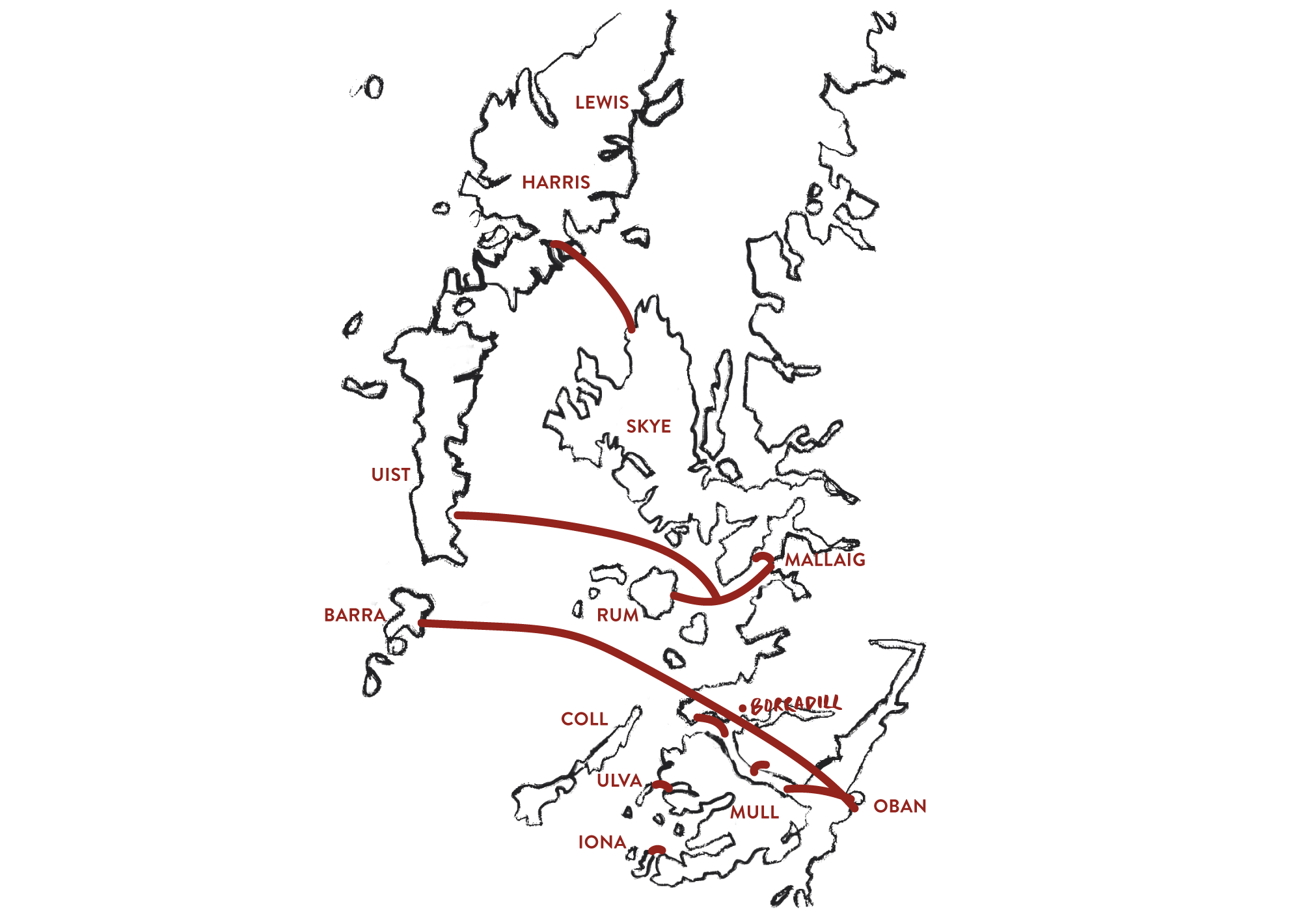
Ardnamurchan is where the map runs out of road and starts offering you water instead. From the cabins at Borradill, on the shore of Loch Sunart, you are already standing in the doorway between the Highlands and the Hebrides. What follows is the route we send our own guests: the ferries, the timings, and the two islands — Mull and tiny Ulva — that make the best first step out to sea.
How do you get to Ardnamurchan in the first place?
Most guests come via Fort William and the Corran Ferry, which crosses the narrows of Loch Linnhe in about five minutes and runs every twenty to thirty minutes, seven days a week. It saves well over an hour compared with the long way round on the A861 and A830, and there is no need to book — you simply drive on. From Corran, the road follows Loch Sunart west through Strontian and Salen, with Borradill roughly forty minutes further on, at Glenborrodale.
How do you reach the Isle of Mull from Ardnamurchan?
This is the crossing most of our guests don't expect, and it's the one we love most. From Kilchoan, at the western tip of the peninsula, a CalMac ferry sails to Tobermory on Mull in around thirty-five minutes. It runs Monday to Saturday, turn up and go, no advance booking required, though buying online in advance is worth doing in July and August when the car deck fills fast. It is, by some distance, the quieter and more scenic route onto Mull — the alternative is the busier Oban to Craignure crossing, which suits guests arriving from the south.
Once on Mull, Tobermory's harbour of painted houses is twenty minutes' walk from the ferry, and the road west to Calgary and Dervaig opens up beaches, distillery visits and some of the best sea eagle watching on the west coast.
A day on Ulva: the smallest crossing you'll ever take
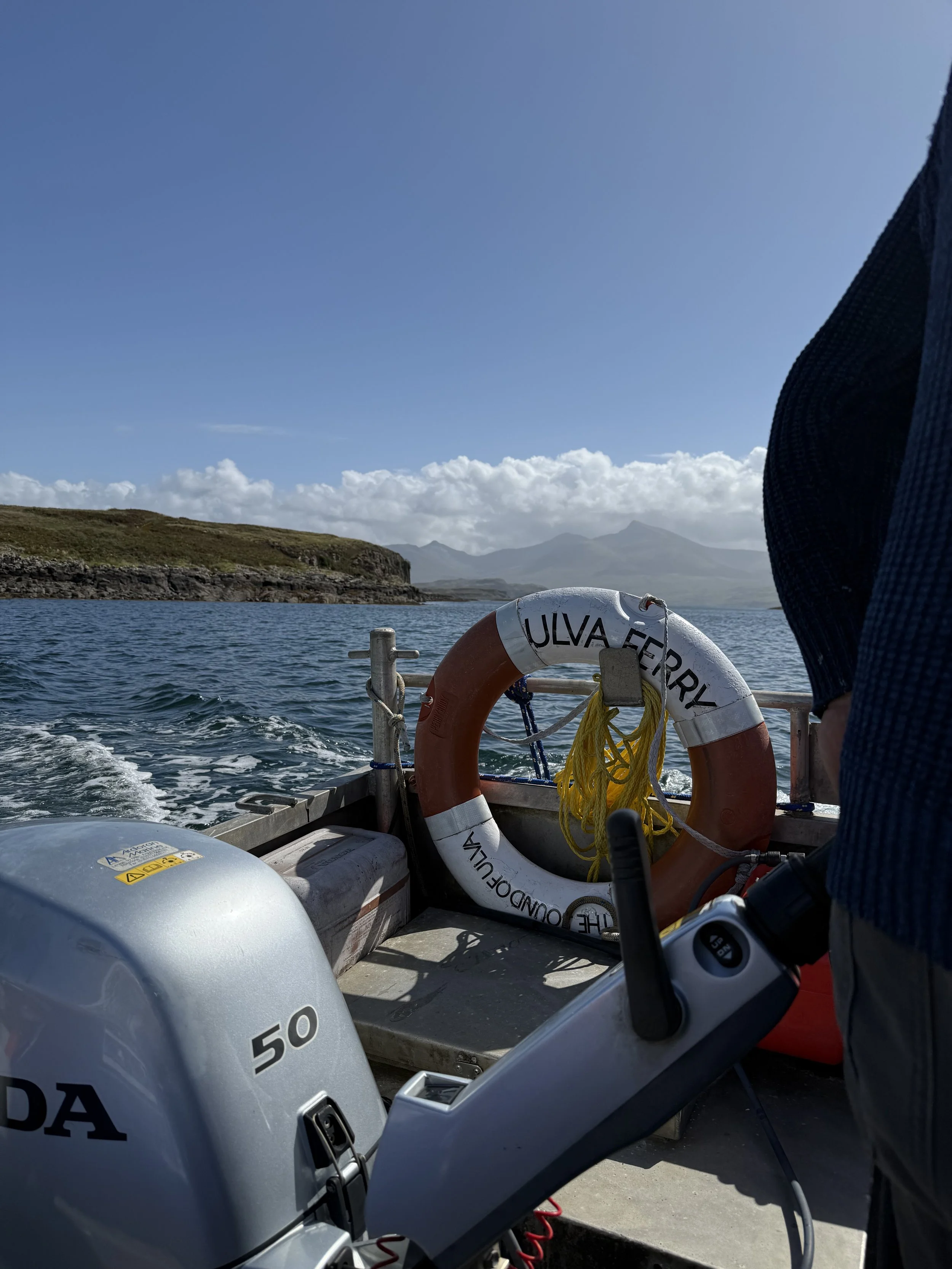
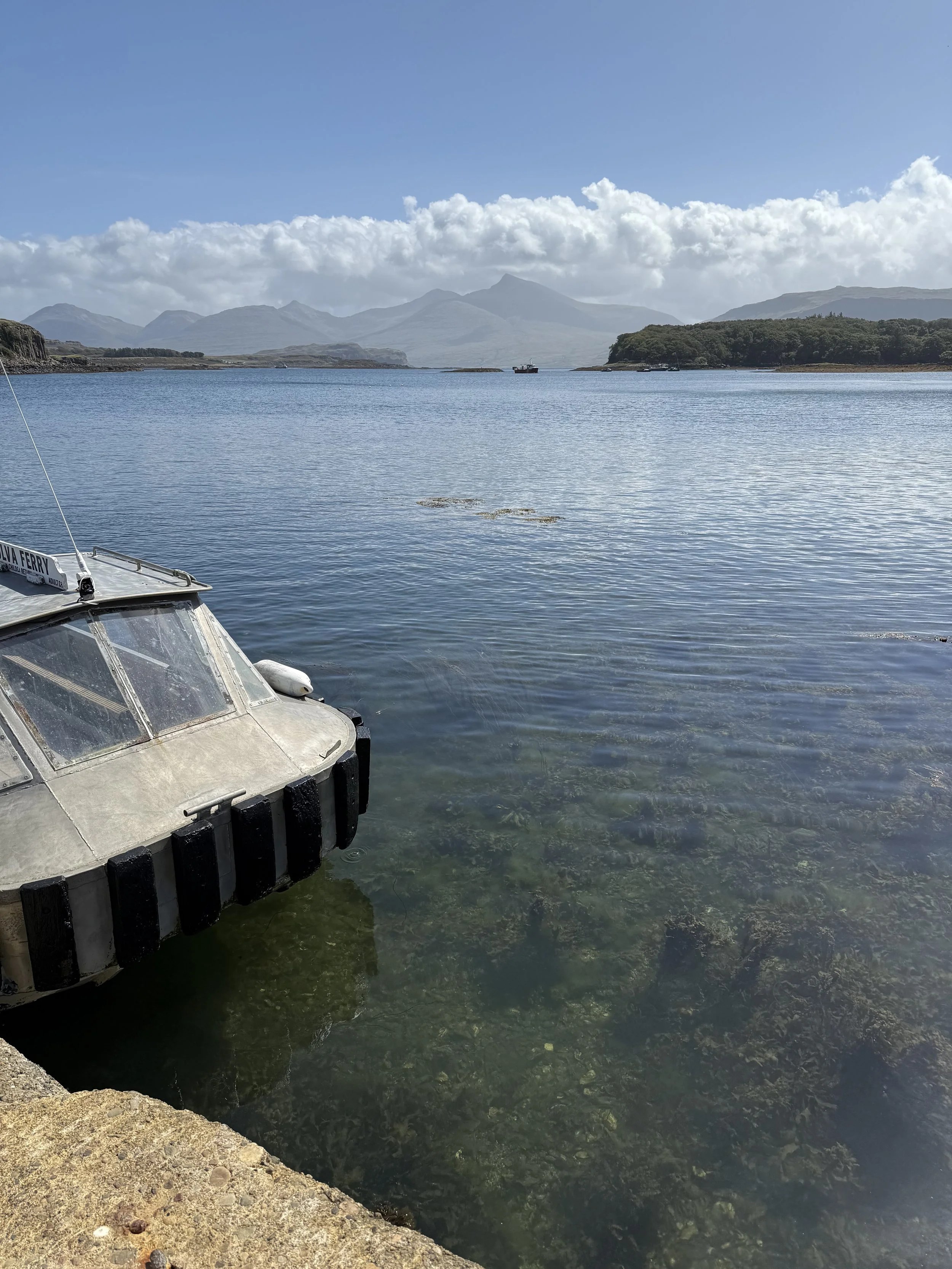
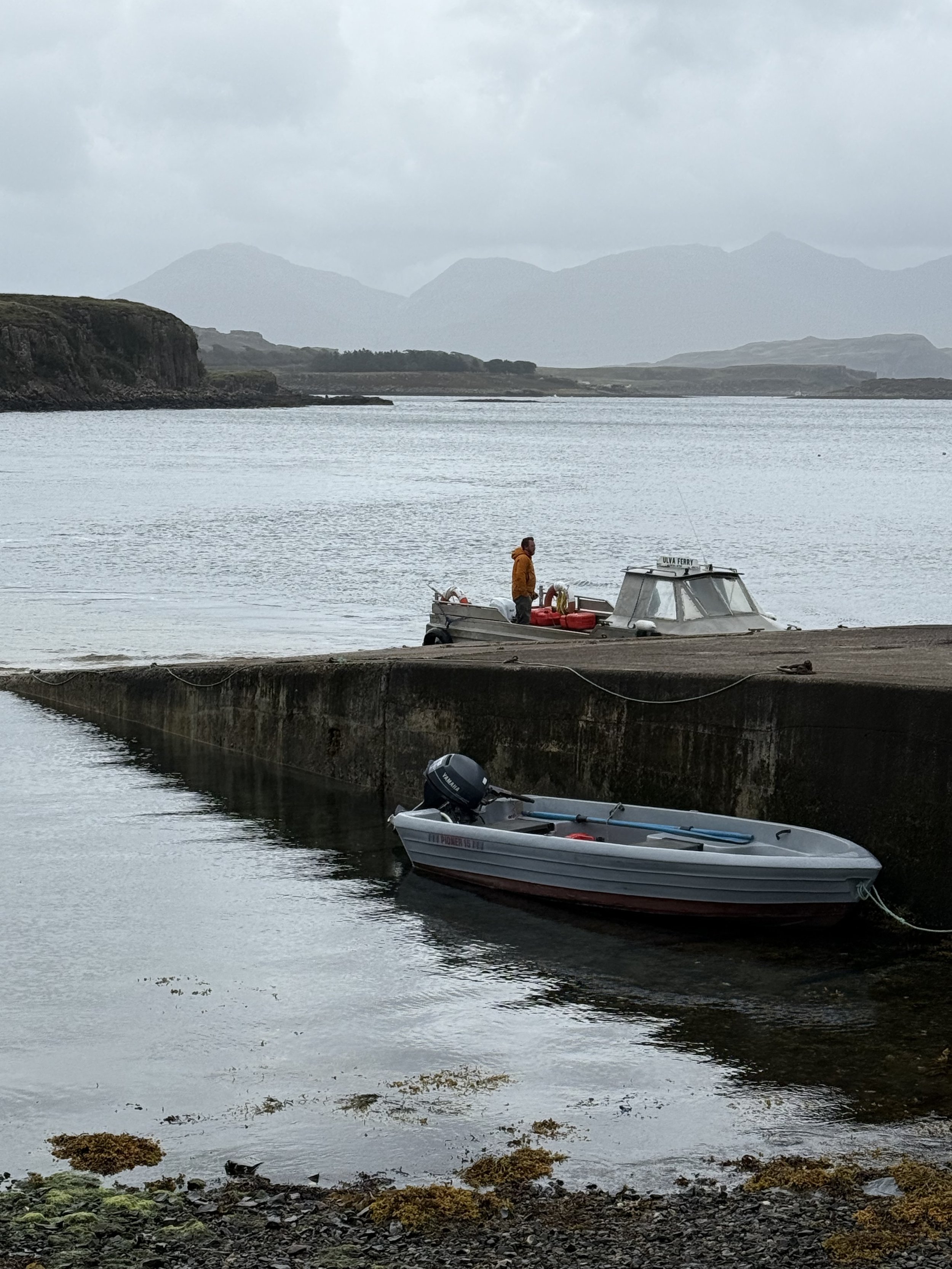
Off Mull's west coast sits Ulva, an island of sixteen residents and several thousand years of continuous habitation, reached by a ferry that has no timetable at all. You walk down to the slipway, slide a wooden panel across to show a red square, and wait for the boatman to see it from the other side and come and get you. The crossing takes minutes. It runs in summer Monday to Friday, with Sunday sailings added in June, July and August — currently no Saturday service, so check the Isle of Ulva Ferry page or Facebook before you set off.
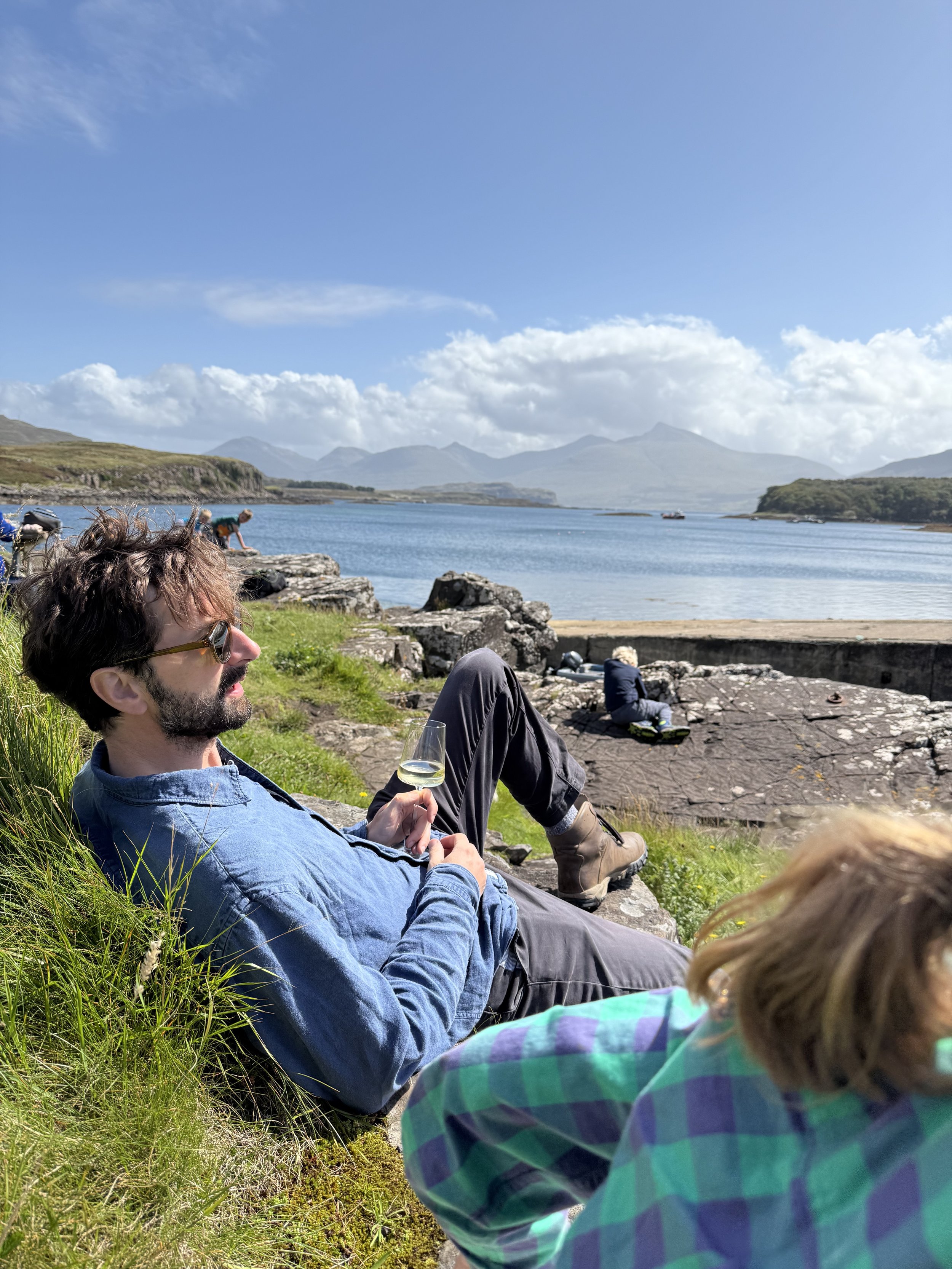
On the far side is the Boathouse, a seafood restaurant on the jetty now run by Sam, Ro and the designer and broadcaster Banjo Beale, serving langoustine, smoked Tobermory trout and bread baked on the island that same morning. We went in early summer and ate lobster with our feet still damp from the crossing, a lab-coloured dog asleep under the next table. Beyond the restaurant, tracks lead past Sheila's Cottage — a turf-roofed croft restored to show how families lived here two centuries ago — and on to the gardens of Ulva House, currently being brought back to life by Banjo and his husband Ro as a small hotel.
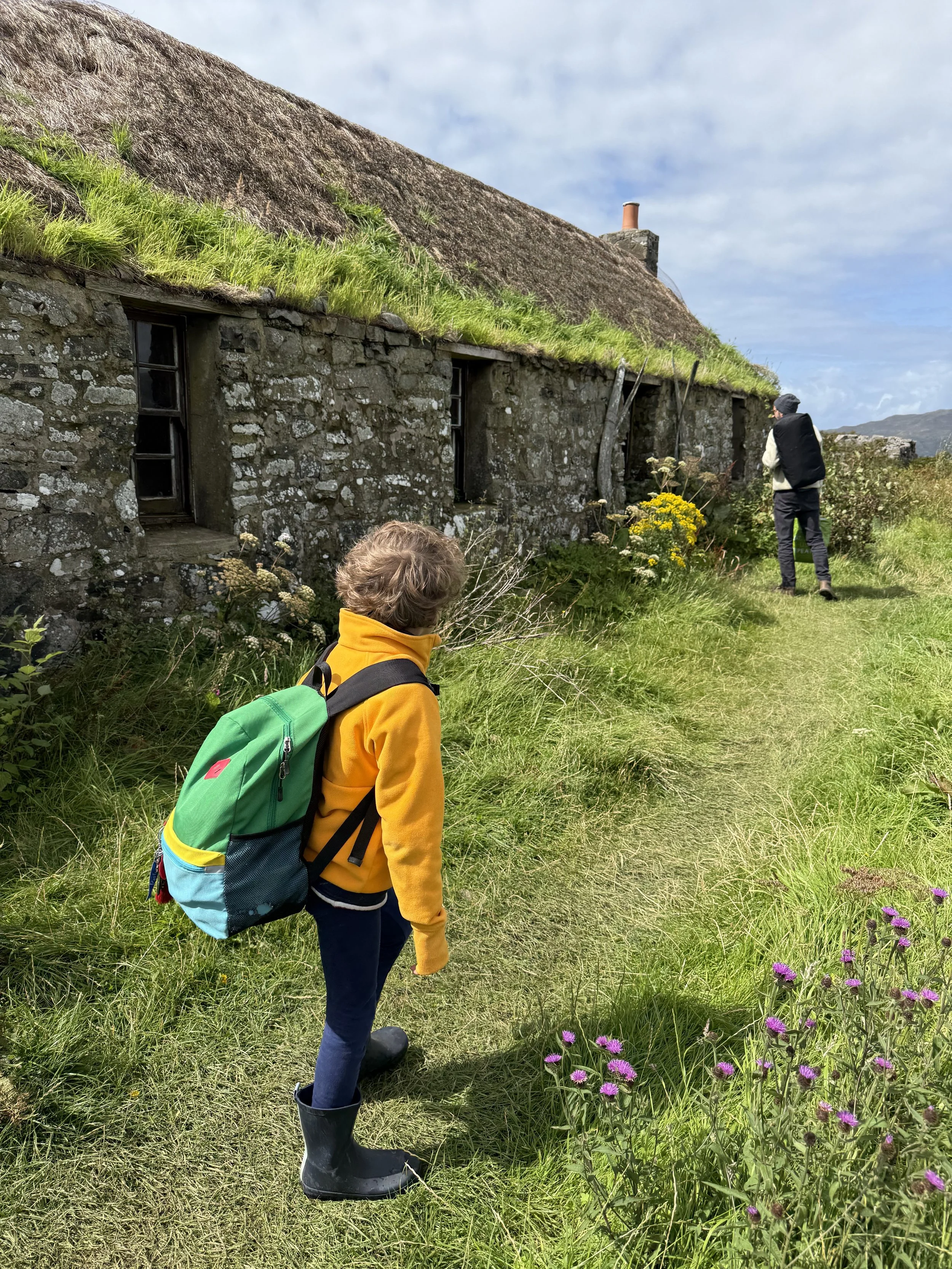
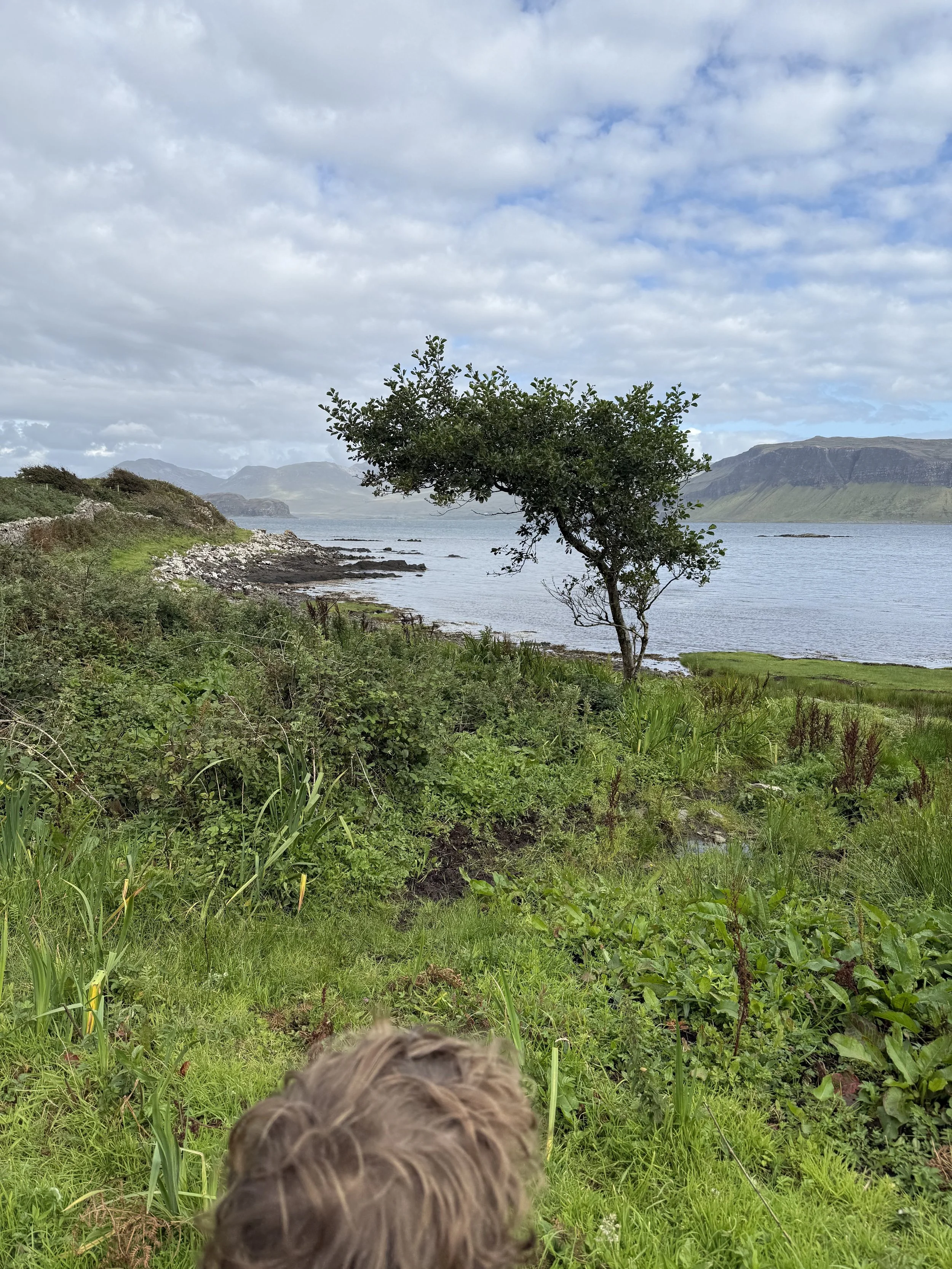
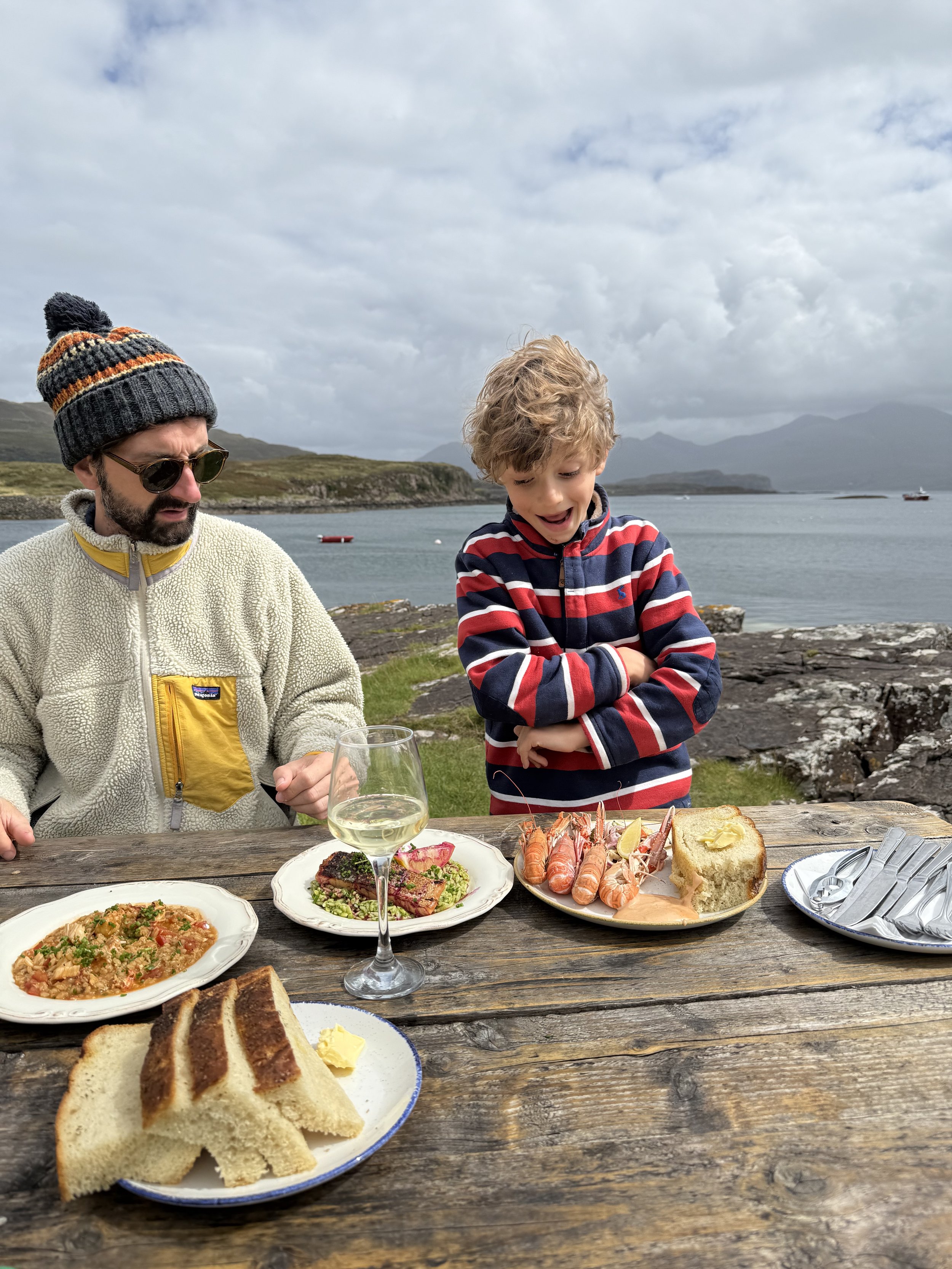
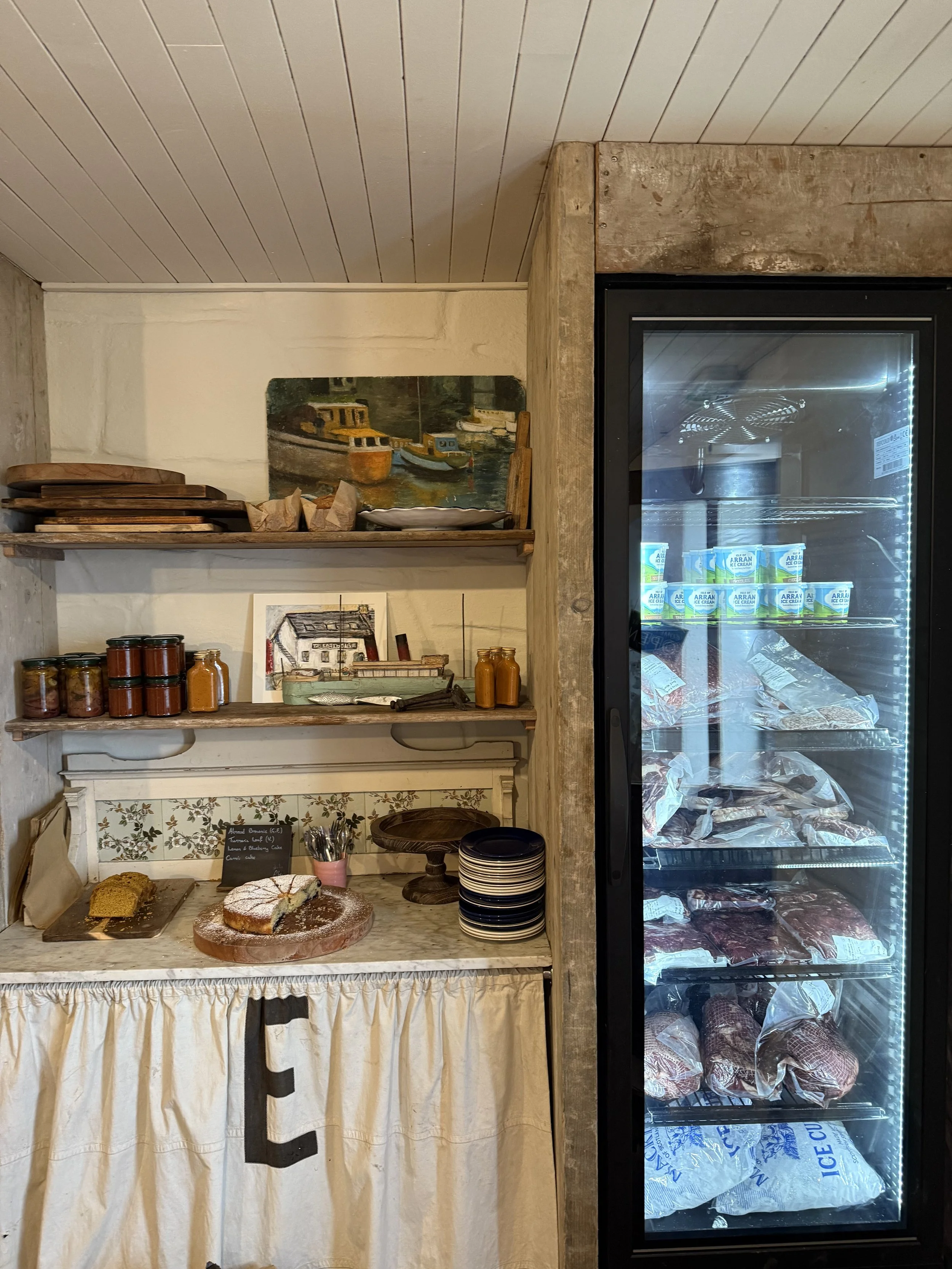
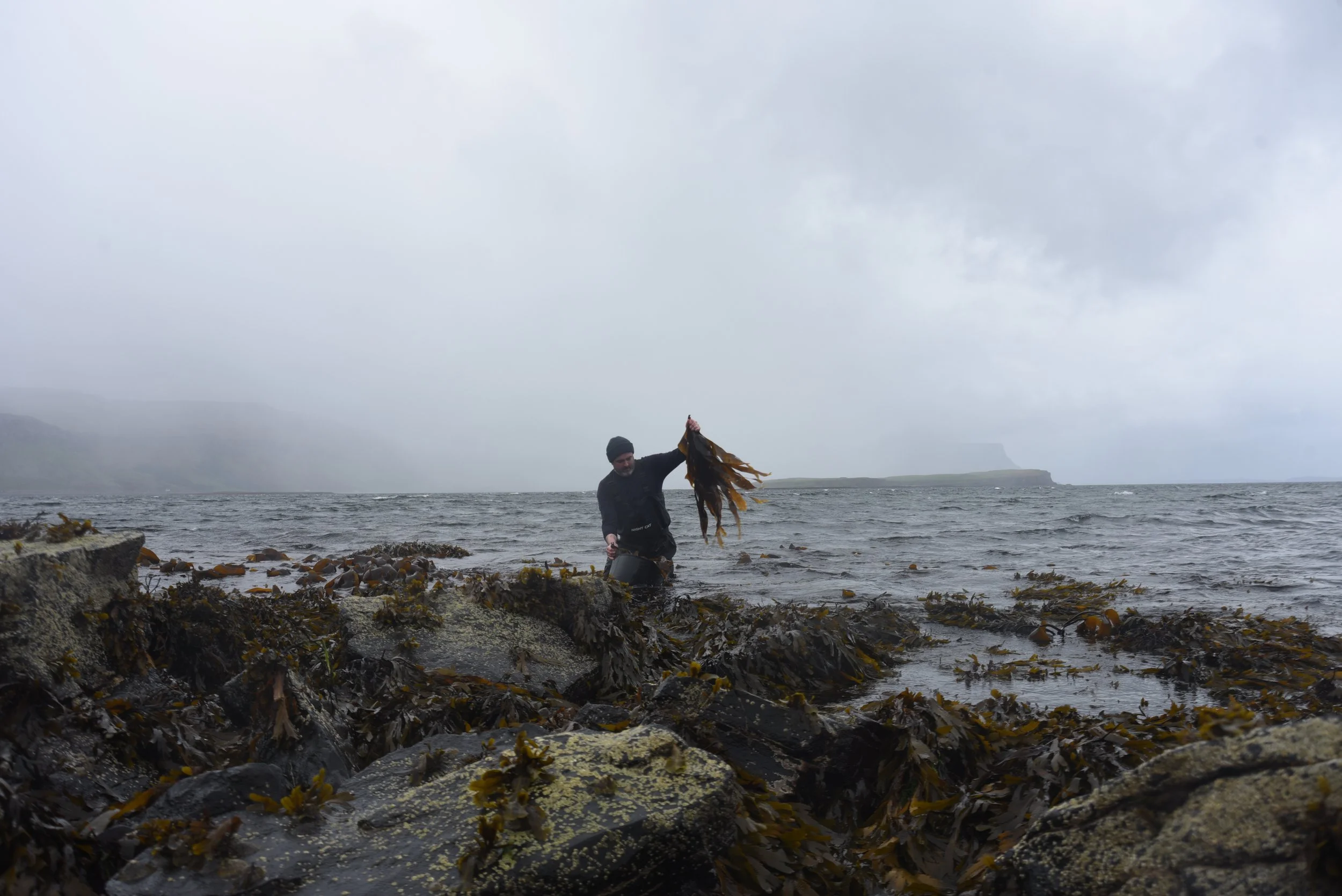
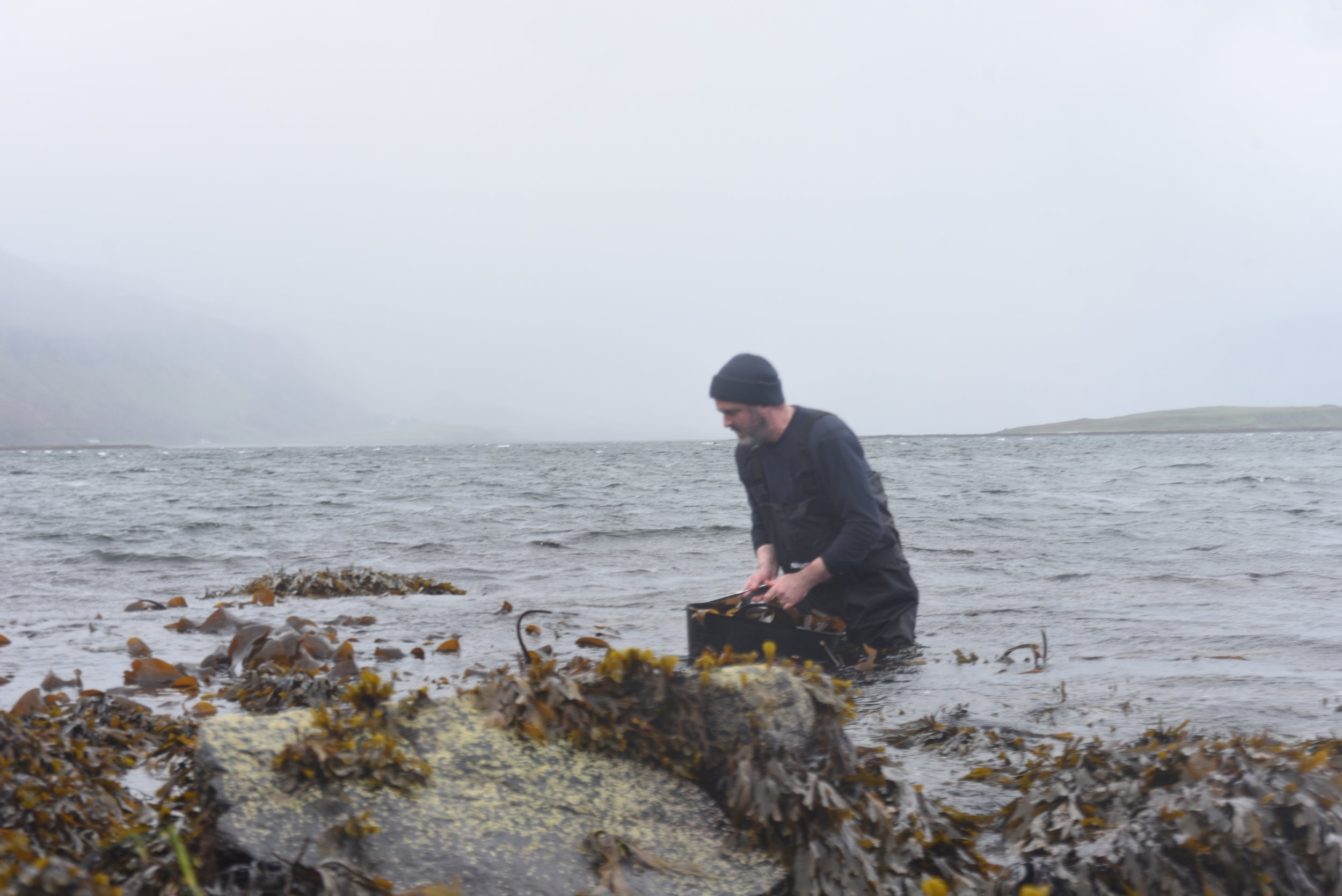
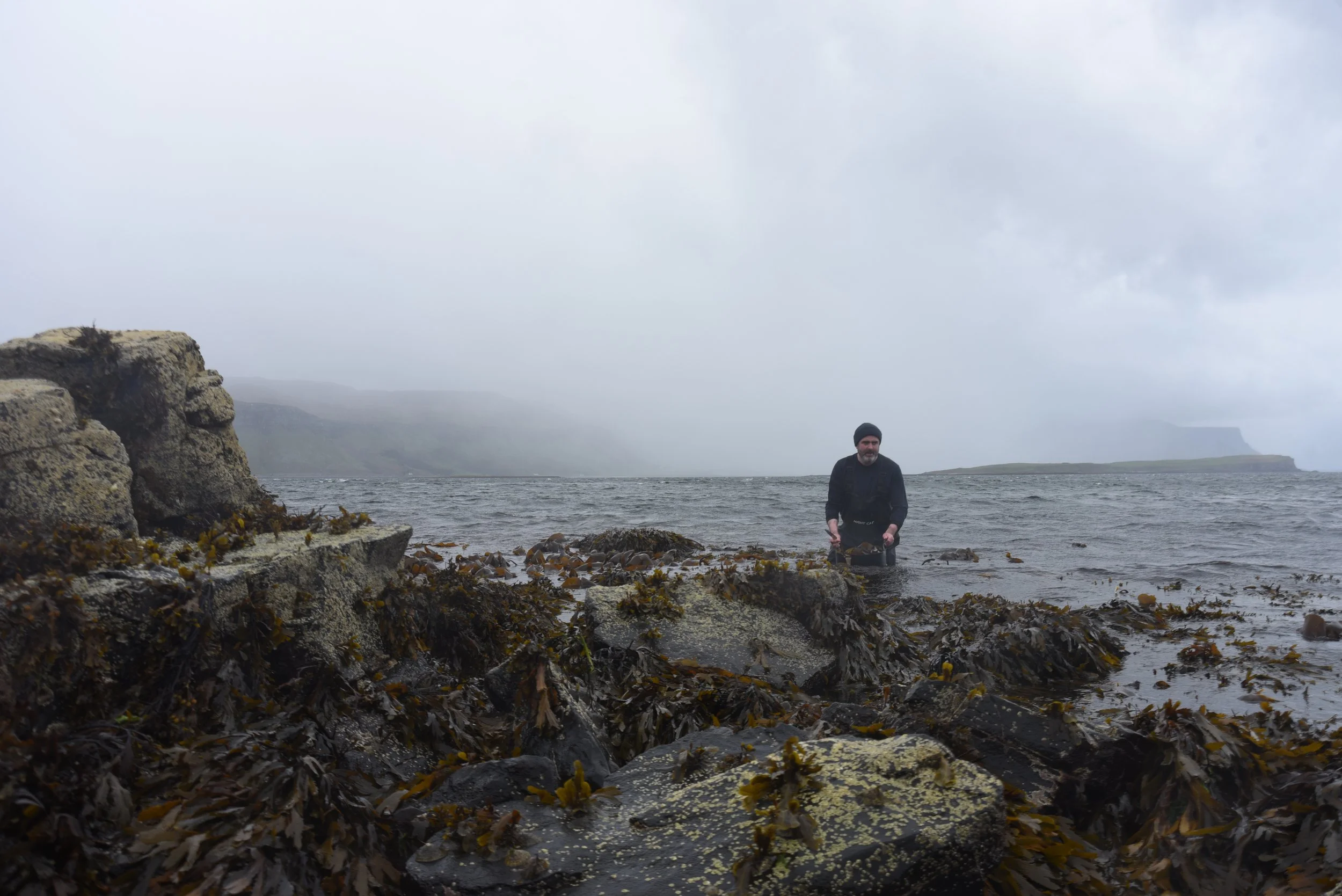
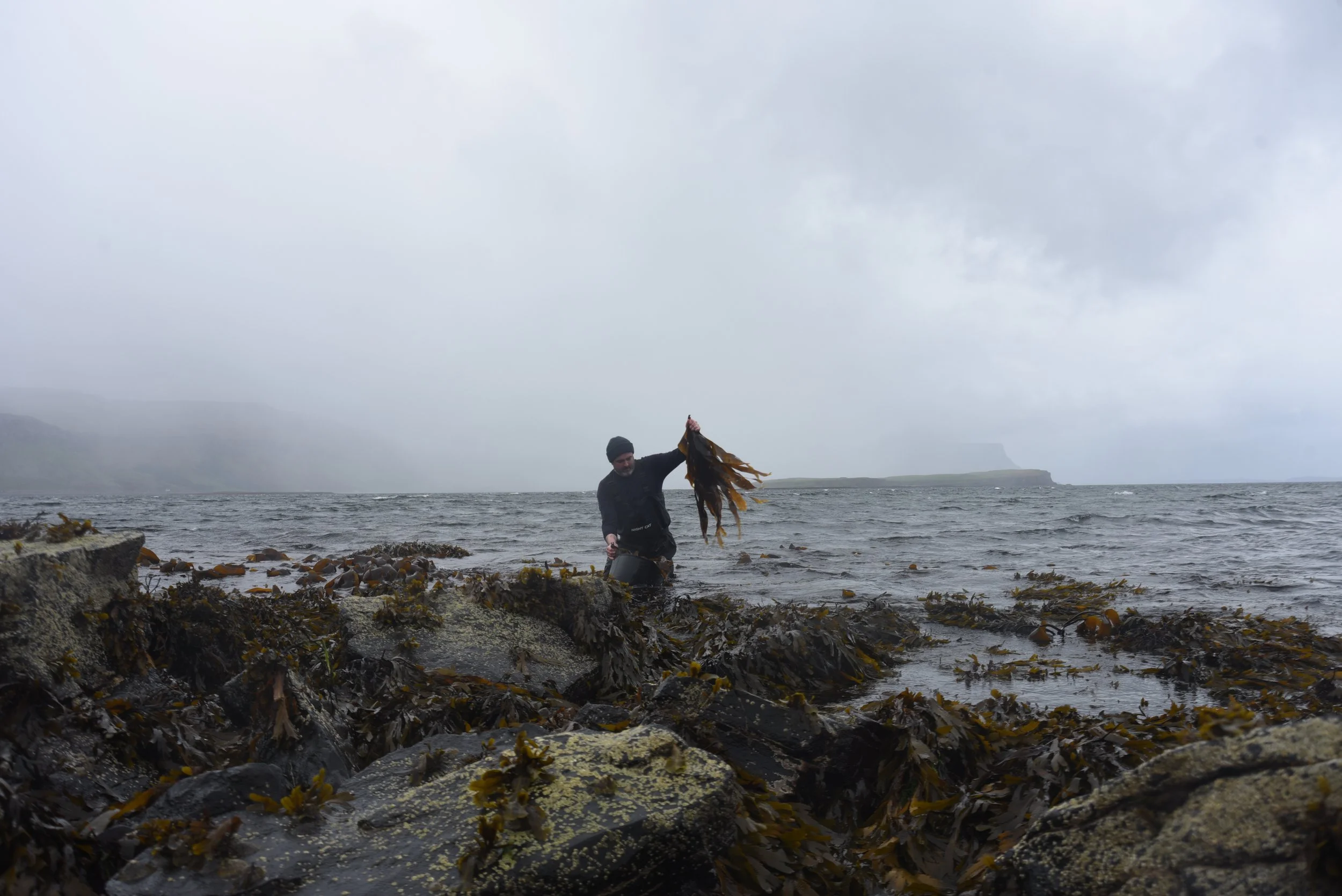
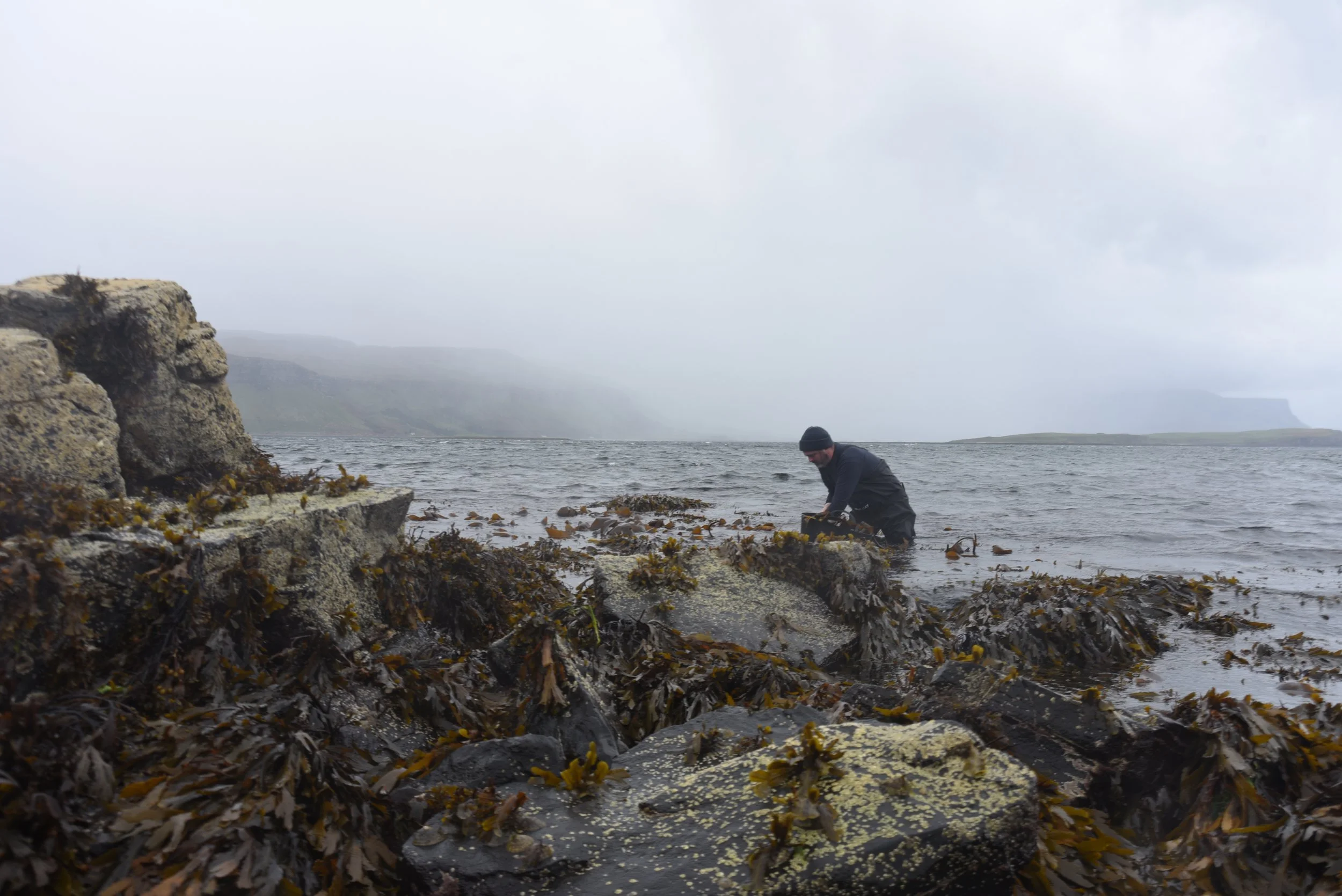
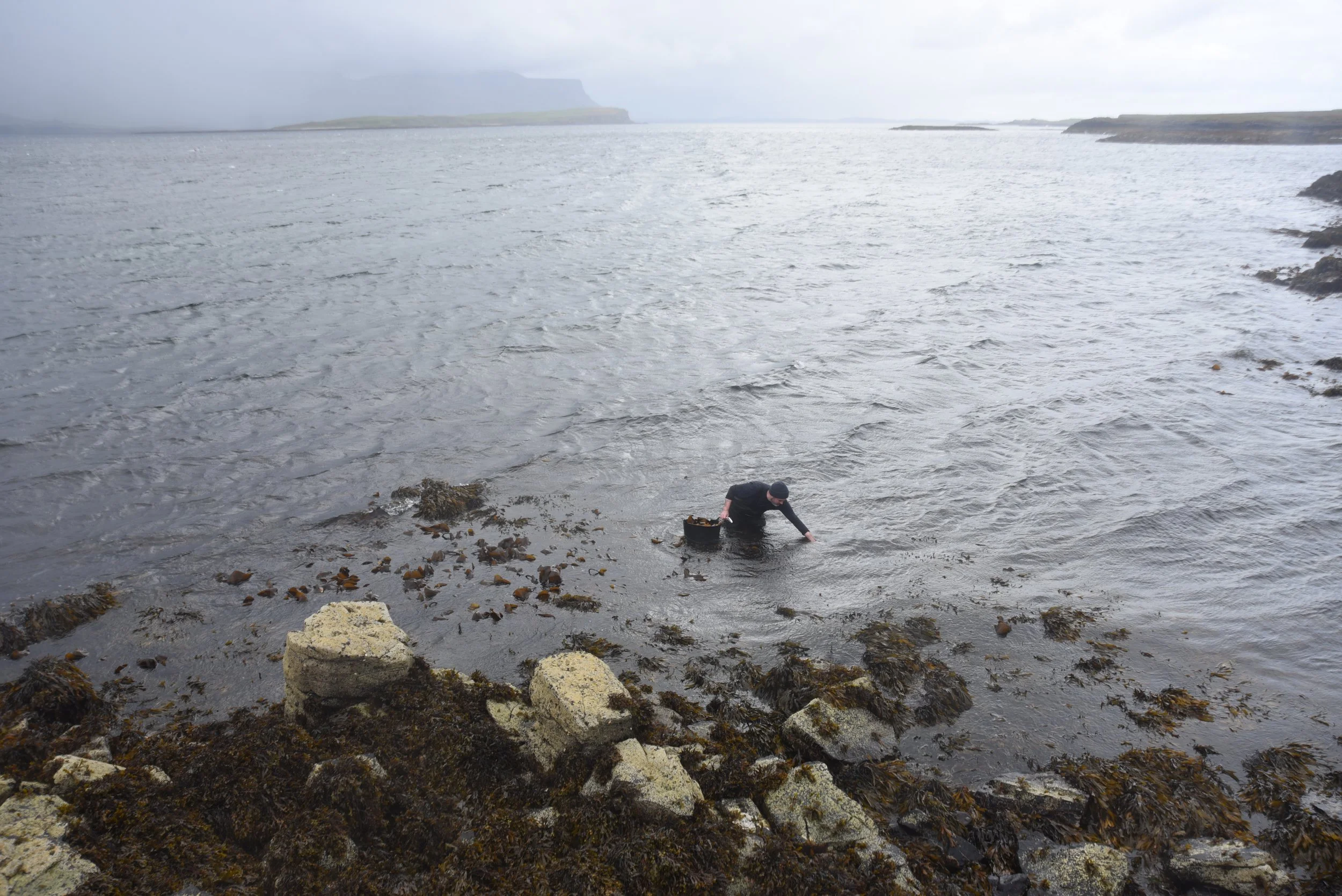
Ulva is also where we tried kelp bathing for the first time, at Ormaig, who harvest the seaweed themselves from the water around the island. The kelp goes into a muslin bag, dropped into a hot bath, and as it steeps the water turns a deep, peaty brown and the gel from the seaweed settles onto your skin. Seaweed bathing has a long working history along this coast and in Ireland, where Edwardian bathhouses still operate on the same principle. Ormaig's version is a small, contemporary revival of it rather than a claim to any single unbroken tradition, but sitting in that dark water by candlelight, in a cabin above a sea loch, it feels like something considerably older than it is.
Borradill sits on land named for a seven foot Viking prince who is buried there, and it's hard not to let that shape how you spend an evening here. We've taken to pairing the kelp bath with a fire on the shore below the cabins after dark — not a documented Norse ritual so much as a fair guess at one, borrowing from what the Norse did practice: fire, cold water, and a weekly bath taken seriously enough to name a day of the week after it. Kelp bath first, while the water's hot. Then down to the beach, the fire going, cold air on wet skin, the sea loch black in front of you. It's the kind of restoration the wellness seekers among our guests come looking for, and it costs nothing but driftwood and a lighter."
How do you carry on to the Outer Hebrides from here?
Ardnamurchan sits at the hinge between the Inner and Outer Hebrides, and there are three practical ways to keep going west.
The most direct is via Skye: drive north to Mallaig (around an hour and a half from Borradill), take the short ferry or the bridge to Skye, then sail from Uig to Tarbert on Harris or Lochmaddy on North Uist. This is the route for guests who want the Outer Hebrides proper — white sand beaches on Harris, the standing stones at Callanish, machair studded with wildflowers in June.
The second is via Oban, roughly two and a half hours south, with longer CalMac sailings out to Castlebay on Barra or Lochboisdale on South Uist — a fuller day, better suited to an overnight stop than a day trip.
The third, for the properly committed, is the seasonal Mallaig to Lochboisdale crossing, which only runs at certain times of year and is worth checking on the CalMac site well ahead of a trip.
None of these are day trips from Borradill. What Ardnamurchan gives you instead is the practice run — Mull and Ulva show you how island-hopping here actually works, the tide-dependent timetables, the turn-up-and-go crossings, the small boats that don't care about your schedule — before you commit a full day, or two, to reaching Harris or the Uists.
Planning your own crossing
A few things worth knowing before you book anything:
CalMac's Hopscotch tickets combine several routes at a better price than booking each leg separately, and are worth looking at if Mull, Ulva and beyond are all on your list.
Car space on the Kilchoan–Tobermory and Oban routes gets tight in July and August; book ahead if you're bringing a vehicle, or plan to walk on and hire bikes or a car on the far side.
The Ulva ferry carries foot passengers only, so plan your Mull day around a car left at the slipway. Same for Iona, also accessible by ferry off Mull.
Tides genuinely change sailing times on some routes in summer — always check the live timetable, not last year's PDF.
We're at the point where the road runs out and the ferries take over, and two cabins in the woods above Loch Sunart make as good a base as any to plan from.
Book the Cottage, the House, or both together at borradill.com/book.
