
Staying inside a Celtic rainforest: what it's actually like to wake up in one of Britain's rarest landscapes
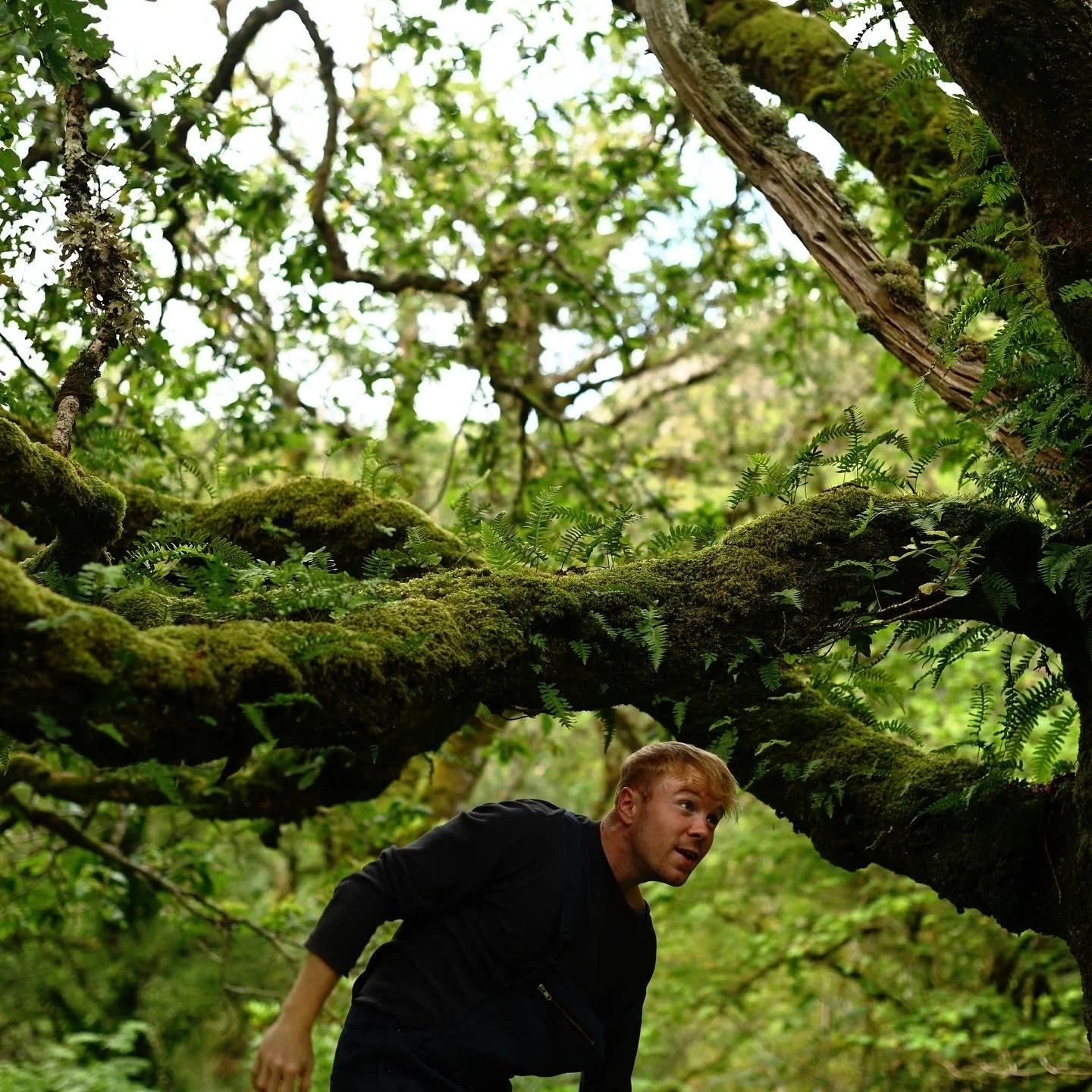
The ancient oaks of the Celtic rainforest are covered in ferns, mosses and lichens
Published by Borradill | West Highlands of Scotland
Along the wet, Atlantic-washed edges of Scotland's west coast lies one of Europe's rarest habitats: the Celtic rainforest. Once stretching across much of the coastline, this ancient woodland now survives only in small, precious fragments – and one of these can be found at Borradill.
The easiest access is from late autumn to mid-spring, when the bracken is down and you are free to roam. Walk out the door at Borradill House or Cottage following the paths north, towards the sound of the waterfall, pass through a birch stand with an ancient stone oak at its centre – and, according to local archaeologists, a stone tomb – and you arrive at the oldest of the native oaks. Gnarled and majestic, they cling to the hillside in an unlikely low and spreading configuration, mosses, lichens and epiphytes hanging from their many branches. It is one of those places where time collapses.
Up close, you find plants on plants on trees – a dense layering of lichen, moss, fungi and fern that rewards stopping and really looking. Like the inside of a Victorian bell jar, but everywhere. A magnifying glass, or an iPhone with zoom, is worth having in your pocket.
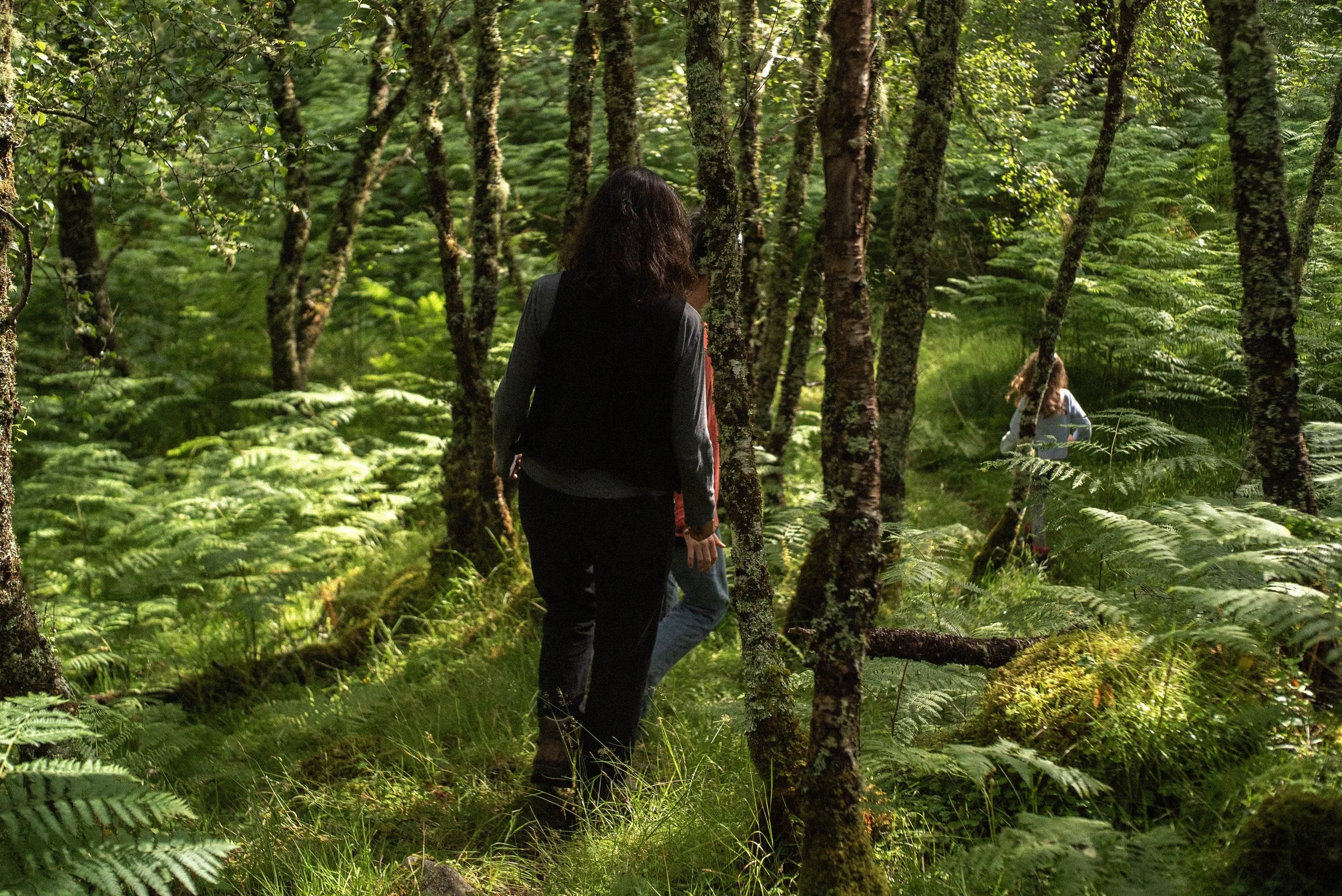
The birch stand at Borradill
What makes a Celtic Rainforest special?
Celtic rainforests are defined by high rainfall, clean air and mild temperatures – conditions that allow mosses, lichens and ferns to grow not just on the forest floor but on the trees themselves. These epiphytes form dense living layers that give the woodland its soft, otherworldly quality. Many of the species clinging to branches here are little understood, and the forest may still hold discoveries yet to be made.
The Scottish Government has given these forests its highest ecological designation. A movement to protect them was led by campaigner and author Guy Shrubsole, and lostrainforestsofbritain.org is a good place to start understanding what you're walking through. We keep a selection of books on the subject in both cabins.

The ‘Mother Tree’ at Borradill according to Suzanne Simard’s theory in her book ‘Finding the Mother Tree: Uncovering the Wisdom and Intelligence of the Forest’.
a rare habitat
Today, only around one percent of the UK's original Celtic rainforest remains. The Ardnamurchan and Morvern peninsulas are among its most important strongholds – and at the north-eastern edge of Borradill's 25 acres lies a fragment of this ancient woodland, a living link to the landscapes that once covered the west coast.
restoration and stewardship
Our intention at Borradill is long-term and deliberately patient. Over the coming decades we aim to help the land restore itself as close as possible to its indigenous state – gradually removing commercial planting, carefully managing invasive rhododendron, and allowing native oak, hazel and birch to reclaim space.
Staying here offers the rare chance to experience a Celtic rainforest. This is conservation measured in generations – a commitment to leaving this place richer for those who come after.
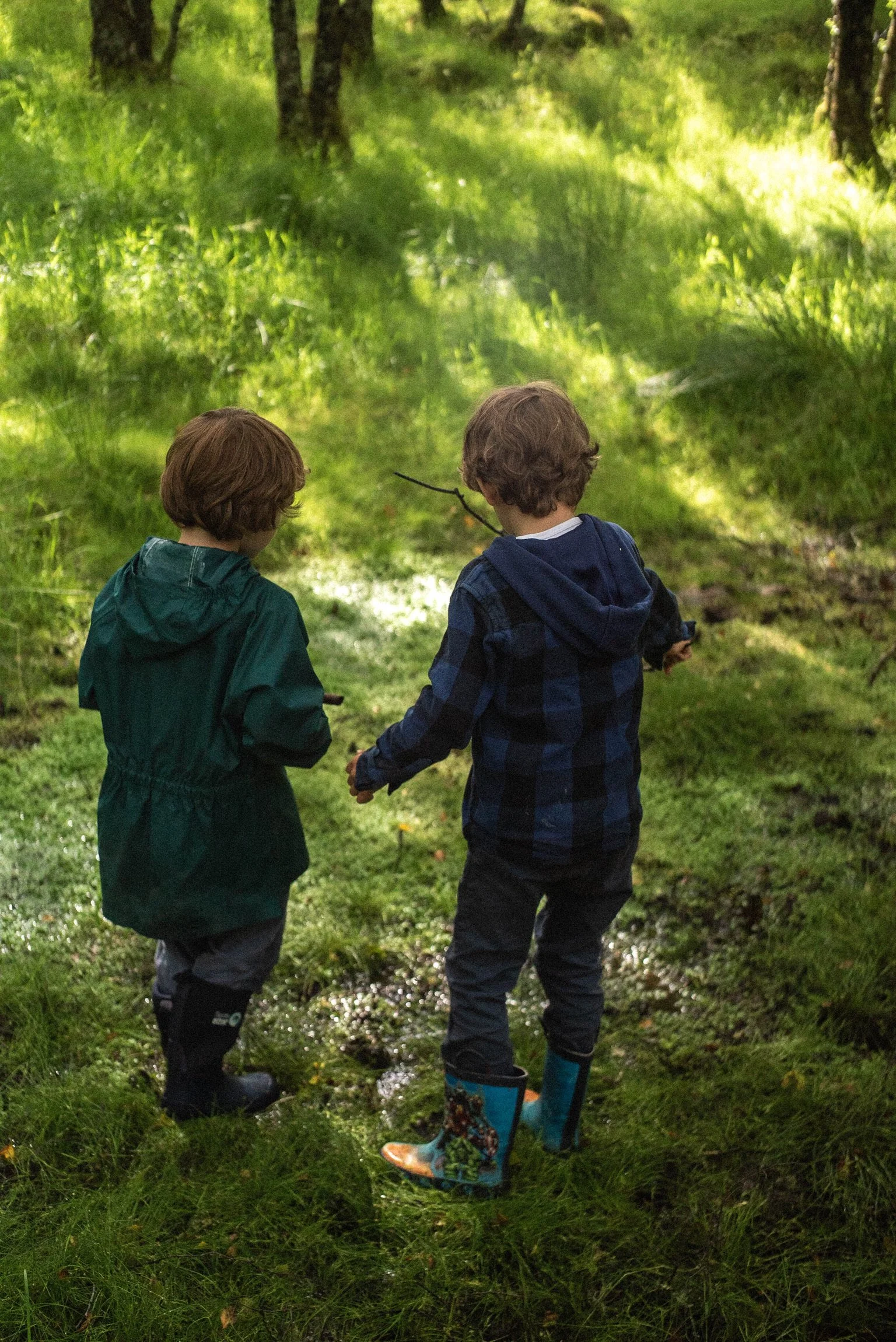
Feeding imaginations in the Celtic Rainforest
